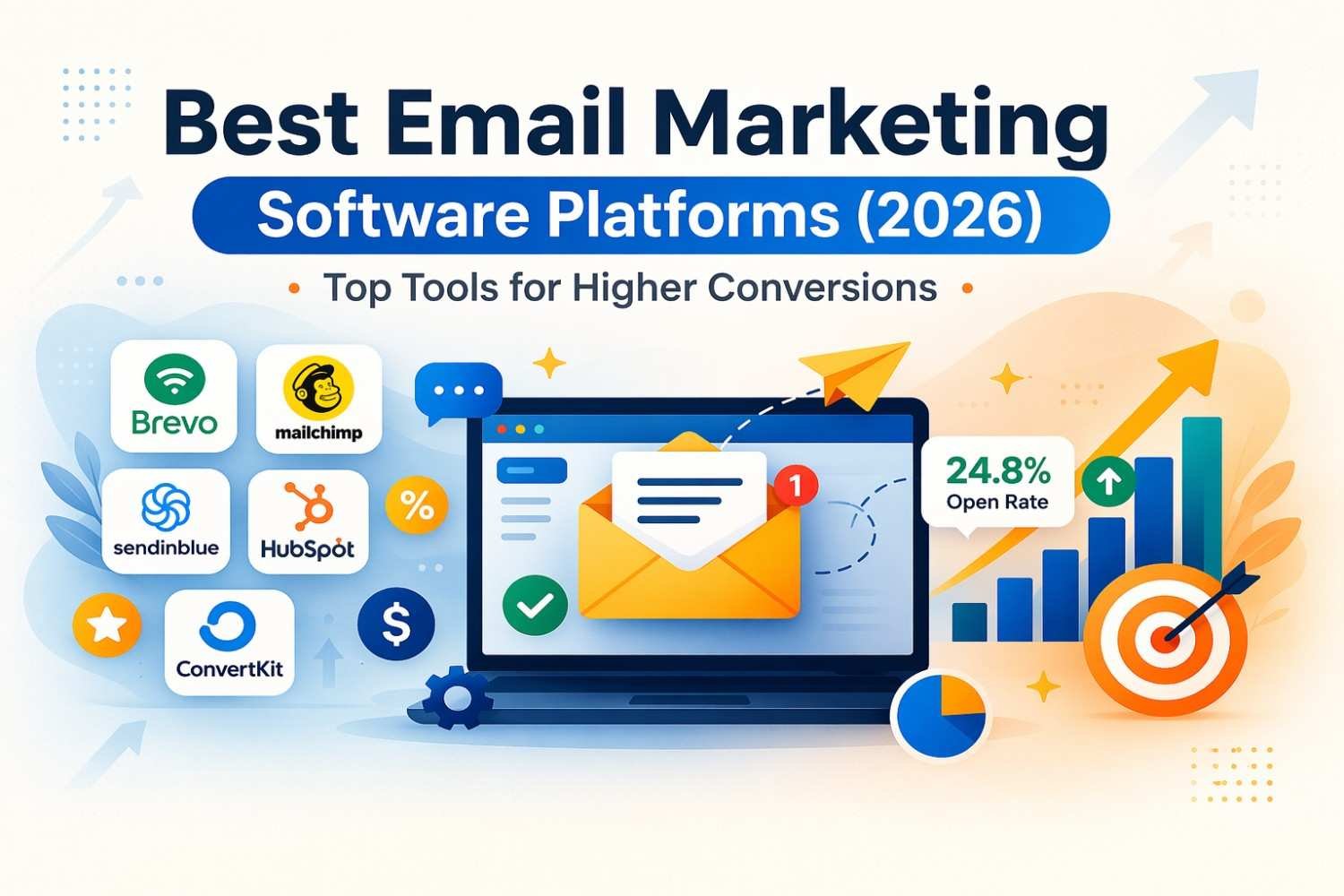
Email marketing continues to deliver one of the highest ROIs in digital marketing in 2026, with well-executed campaigns often generating $36–$42 for every $1 spent. However, success depends on choosing the right platform — one that combines excellent deliverability, powerful automation, AI-driven personalization, and seamless ecommerce or CRM integrations to drive real conversions like purchases, sign-ups, and revenue.
In 2026, tools with advanced behavioral segmentation, predictive analytics, and omnichannel features (email + SMS) stand out. ActiveCampaign frequently ranks as the best overall for automation depth and conversions, while Klaviyo dominates ecommerce, and Brevo offers the best value for growing businesses.
This guide compares the best email marketing software platforms in 2026, focusing on features that boost conversions, current pricing, pros/cons, and practical tips.
Quick Summary
- Best Overall for Conversions & Automation: ActiveCampaign (deep workflows, AI, and CRM integration)
- Best for Ecommerce & Revenue Tracking: Klaviyo (real-time data, cart abandonment, and predictive segmentation)
- Best Value / Budget-Friendly: Brevo (strong free tier, automation + SMS at low cost)
- Best for Beginners & Simplicity: Mailchimp (easy editor, huge template library)
- Best for Creators & Newsletters: Kit (formerly ConvertKit) or Beehiiv
- Strong All-Rounder: Omnisend (ecommerce-focused with SMS)
- Typical Pricing: Free plans available; paid starts from ~$9–$20/month, scaling with contacts/emails
Pro Tip: Focus on automation and segmentation for higher open/click rates (often 20–40%+ improvements). Test deliverability and use A/B testing on subject lines and content.
Top Email Marketing Software Platforms in 2026
1. ActiveCampaign
Features: Advanced marketing automation with 900+ workflow templates, AI for send timing/content, built-in CRM, behavioral targeting, conditional content, SMS, landing pages, and strong reporting.
Pros: Excellent for turning emails into sales through sophisticated automations; high deliverability; connects email to the full customer journey. Frequently tops lists for overall performance and conversions.
Cons: Steeper learning curve for beginners; pricing increases with contacts.
Pricing (2026): Starts at ~$15–$29/month (billed annually) for Lite/Starter; scales with contacts and features.
2. Klaviyo
Features: Real-time ecommerce data sync (Shopify, WooCommerce, etc.), predictive analytics (CLV, churn), dynamic product recommendations, advanced segmentation, cart abandonment flows, and revenue attribution.
Pros: Unmatched for DTC/ecommerce brands — directly ties email to revenue; powerful personalization drives high conversion rates.
Cons: Best suited for ecommerce (less ideal for pure B2B or newsletters); costs can rise quickly with profiles.
Pricing (2026): Free for small lists; paid email plans from ~$20/month (500 profiles); scales with contact volume.
3. Brevo (formerly Sendinblue)
Features: Email + SMS + WhatsApp, marketing automation, built-in CRM, AI assistant for content/subject lines, transactional emails, and strong segmentation.
Pros: Very affordable with a generous free tier (up to 300 emails/day); good for multichannel campaigns and growing businesses.
Cons: Templates and editor are more basic than premium tools.
Pricing (2026): Free plan available; paid from ~$9/month for 5,000 emails or volume-based plans.
4. Mailchimp
Features: Drag-and-drop editor, AI copywriting help, large template library, basic automation, audience insights, and 800+ integrations.
Pros: Extremely beginner-friendly; great for simple newsletters and small businesses.
Cons: Advanced automation and ecommerce features are limited or more expensive; pricing tied heavily to list size.
Pricing (2026): Free for up to 500 contacts/1,000 emails; paid from ~$13–$26/month.
5. Omnisend
Features: Ecommerce-focused automation, SMS/email, pop-ups, segmentation, abandoned cart flows, and omnichannel messaging.
Pros: Strong value for Shopify/WooCommerce stores; good balance of features and price.
Cons: Less depth in pure B2B automation compared to ActiveCampaign.
Pricing (2026): Free for small volumes; paid from ~$16/month.
Other Strong Options
- Kit (formerly ConvertKit): Excellent for creators and content-driven lists.
- HubSpot Marketing Hub: Best for teams already using HubSpot CRM.
- MailerLite / Sender: Affordable alternatives for small teams.
Comparison Section
| Platform | Starting Paid Price | Free Plan | Best For | Automation Depth | Ecommerce Strength | Key Conversion Driver |
|---|---|---|---|---|---|---|
| ActiveCampaign | $15–$29/month | 14-day trial | Advanced automation & CRM | Very High | Good | Behavioral workflows & AI |
| Klaviyo | $20/month | Limited (250 profiles) | Ecommerce & revenue tracking | High | Excellent | Predictive segmentation |
| Brevo | $9/month | Generous (300 emails/day) | Budget multichannel campaigns | Good | Good | SMS + affordable automation |
| Mailchimp | $13–$26/month | Up to 500 contacts | Beginners & simple campaigns | Basic | Moderate | Easy editor & templates |
| Omnisend | $16/month | Limited | Ecommerce omnichannel | High | Very Good | Abandoned cart & flows |
Notes: Prices are approximate as of April 2026, often lower with annual billing, and scale with contacts or emails sent. Deliverability depends on list quality and sender practices more than the tool itself.
Compare / Check Options Section
- Define Your Goals — Newsletter, automation, or ecommerce revenue?
- Prioritize Conversions — Look for segmentation, A/B testing, and behavioral triggers.
- Test Deliverability — Run trial campaigns before committing.
- Evaluate Total Cost — Include contacts, emails, SMS, and add-ons.
- Check Integrations — Ensure compatibility with Shopify, WooCommerce, CRM, etc.
- Review Compliance — GDPR/CAN-SPAM support is essential.
- Read Recent Reviews — Focus on 2026 updates and AI features.
Real Tips Section
- Focus on Segmentation & Personalization — Improves engagement significantly.
- Leverage Automation — Welcome, cart abandonment, and win-back flows drive revenue.
- Optimize for Mobile — Most users open emails on mobile devices.
- Use AI Features — Subject lines, content, and send-time optimization.
- Maintain List Hygiene — Remove inactive users regularly.
- A/B Test Everything — Improve CTR and conversions.
- Combine Channels — Email + SMS improves conversion rates.
FAQ Section
Q: What is the best email marketing platform in 2026?
A: ActiveCampaign for automation and Klaviyo for ecommerce.
Q: Which platform is best for ecommerce?
A: Klaviyo is the top choice for revenue-focused ecommerce brands.
Q: How much does email marketing software cost?
A: Free plans exist; paid tools start around $9–$29/month.
Q: Do these tools include SMS?
A: Yes — Brevo, Klaviyo, and Omnisend include SMS features.
Q: Is Mailchimp still good in 2026?
A: Yes for beginners, but weaker in advanced automation.
Q: How can I improve conversions?
A: Use segmentation, automation, and A/B testing.
Conclusion
In 2026, email marketing platforms go beyond newsletters — they power full conversion systems using automation, AI, and behavioral targeting.
ActiveCampaign is best for overall automation, Klaviyo dominates ecommerce, and Brevo offers strong value for growing businesses.
Start with a free trial, test performance, and choose the platform that aligns with your business goals. With the right setup, you can significantly increase engagement, conversions, and revenue.
Disclaimer: Pricing and features may change over time. Always verify current details before purchasing.