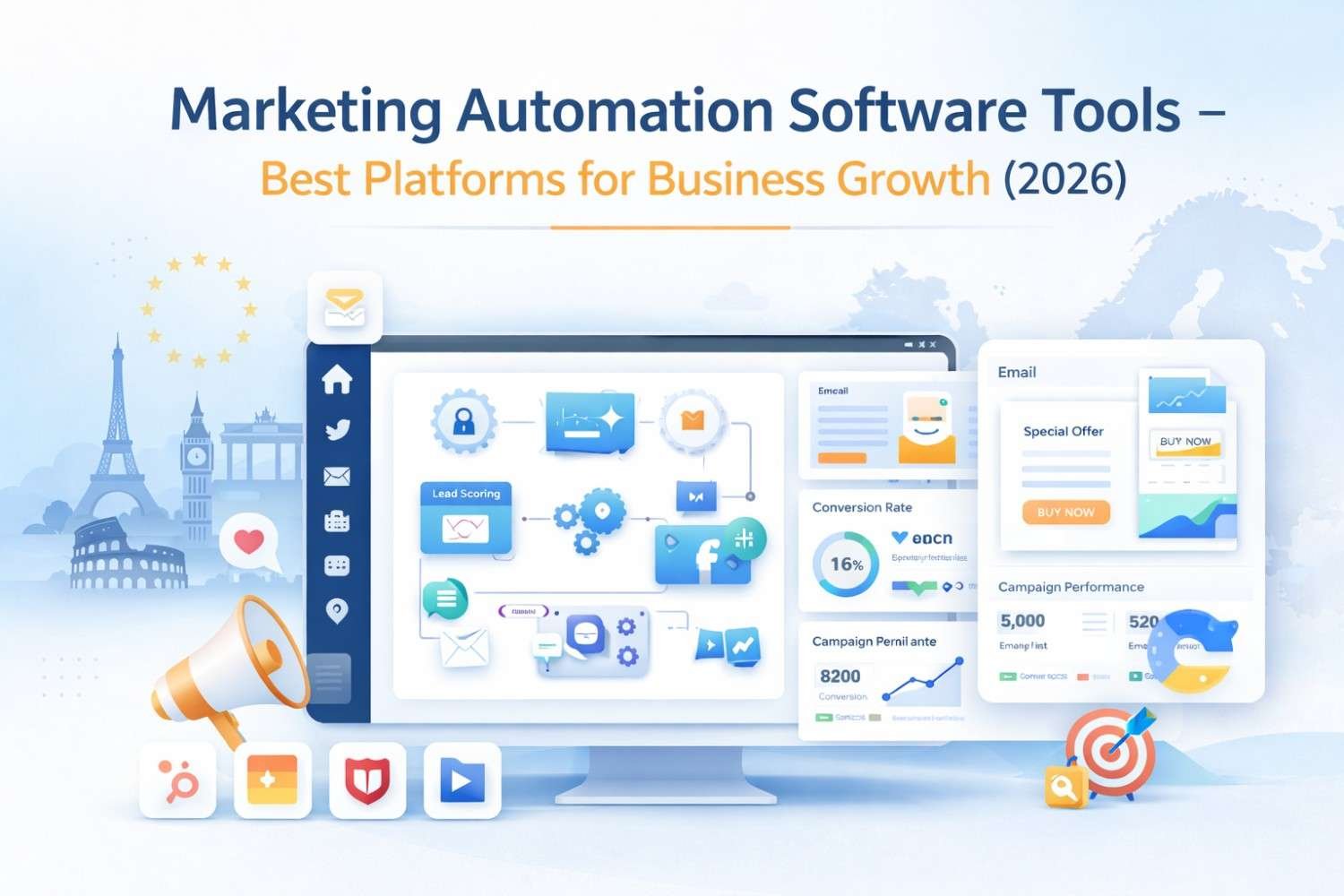
Marketing automation has become essential for scaling customer acquisition, nurturing leads, and driving revenue with minimal manual effort. In 2026, top platforms leverage AI-powered personalization, advanced behavioral segmentation, omnichannel capabilities (email, SMS, WhatsApp), and seamless CRM integrations to deliver measurable growth. Businesses using sophisticated automation often see 20–40% higher engagement and significantly better ROI compared to manual campaigns.
Whether you're a small business, ecommerce brand, or growing B2B team, the right tool automates repetitive tasks like welcome sequences, abandoned cart recovery, lead scoring, and multi-step nurturing while providing clear attribution to revenue.
This guide highlights the best marketing automation software platforms in 2026, with a focus on features that fuel business growth, current pricing, pros/cons, and practical recommendations.
Quick Summary
- Best Overall for Growth & Automation: ActiveCampaign (powerful workflows, built-in CRM, AI features)
- Best for Ecommerce Revenue: Klaviyo (real-time data, predictive analytics, strong Shopify integration)
- Best All-in-One CRM + Marketing: HubSpot Marketing Hub (inbound methodology, scalable from free)
- Best Value / Budget-Friendly: Brevo (affordable multichannel with email + SMS + CRM)
- Best for Beginners & Simplicity: Mailchimp (easy templates, solid starter automations)
- Best for Omnichannel Ecommerce: Omnisend (email + SMS + push notifications)
- Typical Pricing: Free tiers available; paid plans from ~$9–$29/month, scaling with contacts or features
Pro Tip: Prioritize platforms with strong visual workflow builders, behavioral triggers, and revenue tracking. Start with a free trial and import real customer data to test automations.
Top Marketing Automation Software Platforms in 2026
1. ActiveCampaign
Features: Advanced visual automations, AI send-time optimization and content suggestions, built-in CRM with deal pipelines, conditional content, lead scoring, SMS/WhatsApp integration, site tracking, and deep reporting.
Pros: Exceptional for complex, behavior-driven campaigns; excellent deliverability; scales well for SMBs to mid-market; strong customer experience automation. Frequently ranked as the top overall platform.
Cons: Learning curve for advanced workflows; pricing rises with contact volume.
Best For: Businesses wanting sales + marketing automation in one tool.
2. Klaviyo
Features: Real-time ecommerce sync, predictive customer lifetime value and churn models, dynamic product recommendations, advanced segmentation, abandoned cart flows, and omnichannel (email + SMS).
Pros: Unmatched revenue attribution and personalization for online stores; turns data into high-converting campaigns.
Cons: Primarily built for B2C/ecommerce (less ideal for pure B2B lead nurturing).
Best For: DTC brands and Shopify/WooCommerce businesses focused on direct revenue growth.
3. HubSpot Marketing Hub
Features: Full inbound marketing automation, content management, landing pages, email sequences, lead scoring, A/B testing, and seamless integration with HubSpot CRM and Sales Hub.
Pros: True all-in-one platform; excellent for aligning marketing and sales; strong free tier and reporting. Scales beautifully as you grow.
Cons: Advanced features and higher contact volumes become expensive quickly.
Best For: Teams seeking a complete growth platform with CRM at its core.
4. Brevo (formerly Sendinblue)
Features: Email + SMS + WhatsApp automation, transactional emails, built-in CRM, AI content assistance, segmentation, and marketing automation workflows.
Pros: Very affordable with a generous free plan; multichannel capabilities at low cost; good for growing teams on a budget.
Cons: Automation depth and templates are more basic than premium competitors.
Best For: Small businesses and startups needing cost-effective multichannel automation.
5. Omnisend
Features: Ecommerce-focused automations, pop-ups and forms, SMS/email/push, abandoned cart recovery, segmentation, and workflow builder.
Pros: Strong value for online stores; easy setup for common ecommerce flows.
Cons: Less advanced for non-ecommerce or complex B2B use cases.
Best For: Shopify and WooCommerce merchants wanting omnichannel engagement.
Other Strong Options
- Mailchimp: Beginner-friendly with AI tools and large template library.
- Ortto (formerly Autopilot): Powerful journey builder for sophisticated automations.
- Customer.io: Behavioral messaging ideal for SaaS/product-led growth.
Comparison Section
| Platform | Starting Paid Price (approx.) | Free Plan/Tier | Best For | Automation Depth | Ecommerce Strength | Key Growth Driver |
|---|---|---|---|---|---|---|
| ActiveCampaign | $15–$29/month | 14-day trial | All-round automation + CRM | Very High | Good | Behavioral workflows & AI |
| Klaviyo | $20/month | Limited | Ecommerce revenue | High | Excellent | Predictive analytics & flows |
| HubSpot | $15–$20+ (or $890+ Pro) | Strong free CRM | All-in-one inbound growth | High | Moderate | CRM integration & reporting |
| Brevo | $9/month | Generous free tier | Budget multichannel | Good | Good | Affordable SMS + email |
| Omnisend | $16/month | Limited | Ecommerce omnichannel | High | Very Good | Abandoned cart & pop-ups |
Notes: Prices are approximate as of 2026 and often lower with annual billing. They scale with contacts, emails sent, or advanced features. All major platforms support GDPR with consent tools and unsubscribe management.
Compare / Check Options Section
- Clarify Your Goals — Lead nurturing? Ecommerce sales? Multichannel campaigns? B2B vs B2C?
- Focus on Automation Power — Visual builders and behavioral triggers deliver the biggest growth impact.
- Test with Real Data — Import contacts and build sample workflows during trials to see real performance.
- Evaluate Total Cost — Consider contacts, send volume, SMS credits, and add-ons.
- Check Integrations — Ensure seamless connections with your website, CRM, ecommerce platform, or analytics tools.
- Review Deliverability & Support — High inbox placement and responsive support are critical for success.
- Measure ROI — Look for built-in revenue tracking and attribution to prove growth impact.
Real Tips Section
- Start with Core Automations — Welcome series, abandoned cart, and win-back flows deliver fastest wins.
- Leverage AI Features — Use AI for content generation, send-time optimization, and segmentation.
- Segment Aggressively — Personalized behavioral segments can double or triple conversions.
- Combine Channels — Email + SMS significantly boosts conversions for time-sensitive offers.
- Maintain List Hygiene — Clean inactive subscribers regularly to protect deliverability.
- A/B Test Relentlessly — Test subject lines, content, timing, and CTAs.
- Align with Sales — Use unified CRM platforms like ActiveCampaign or HubSpot.
FAQ Section
Q: What is the best marketing automation software in 2026?
A: ActiveCampaign for most businesses needing powerful automation; Klaviyo for ecommerce growth.
Q: Which platform is best for ecommerce?
A: Klaviyo leads with superior data sync and revenue tracking, followed by Omnisend.
Q: How much does marketing automation cost?
A: Free tiers exist; paid plans typically start from $9–$29/month.
Q: Do these tools include SMS?
A: Yes — Brevo, Klaviyo, Omnisend, and ActiveCampaign support SMS.
Q: Is HubSpot worth it for small businesses?
A: Yes, especially due to its free CRM and starter tools.
Q: How can I improve results?
A: Focus on segmentation, personalization, and behavioral triggers.
Conclusion
In 2026, marketing automation platforms transform reactive marketing into intelligent, 24/7 growth engines. ActiveCampaign stands out as the top all-rounder, Klaviyo dominates ecommerce, and HubSpot or Brevo are excellent for scalable entry points.
The key is choosing a platform aligned with your business stage and building customer-focused automations. Start with free trials, test workflows, and measure real revenue impact.
Disclaimer: Pricing and features may change based on provider updates and plan selection as of 2026.